

Component A
Temperature in feedline A
Component B
Temperature in feedline B
Temperature in feedline WFI
WFI supply
Buffer temperature
Maximum tank level
Conductivity
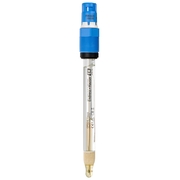
Media pH
Temperature in outlet line
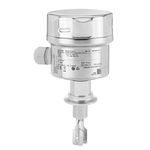
Empty pipe detection
| Measuring point | Product | Alternatives | ||
|---|---|---|---|---|
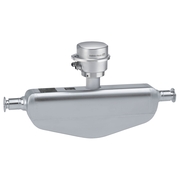


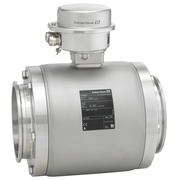

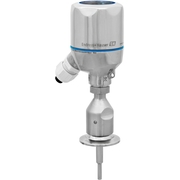
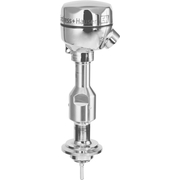
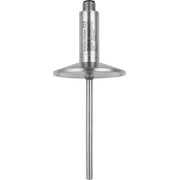


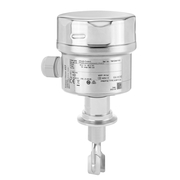
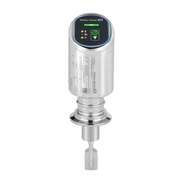

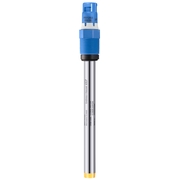


Key instrumentation challenges in the buffer preparation process
Small deviations in buffer composition can directly affect product quality, chromatography performance, cleaning effectiveness, or batch release. Critical factors in buffer operations are pH, conductivity, concentration control, sterility and process consistency. Failures are typically caused by measurement uncertainty, dosing errors, inadequate mixing verification or poor automation control.
- Accurate pH control: Most buffers are defined primarily by their pH specification. Even small pH deviations can impact downstream processes.
- Conductivity measurement and concentration verification: Conductivity is often used to verify final buffer concentration and ionic strength. Critical process parameters are the control of both pH and conductivity.
- Precise dosing of liquids and powders: The buffer is only as good as the recipe execution. Key instrumentation challenges are accurate low-flow chemical dosing, maintaining dosing accuracy across varying flow ranges and detecting incomplete powder dissolution.
- Mixing and homogeneity verification: A buffer may meet specification at one measurement location and fail elsewhere in the tank. Many plants infer homogeneity from mixing time rather than measuring it directly. Inadequate mixing can be caused by poor agitator performance, vessel dead zones and large-scale mixing effects.

FAQ
